Advanced Transmission Technologies (ATTs): From Convening to Committee in Pennsylvania
How Dialogue on Grid and Transmission Innovation at CSG East Event Sparks Legislative Action in the Keystone State

By now, it is no longer news: states, provinces and territories across North America are confronting an increasingly pivotal moment in energy policy.
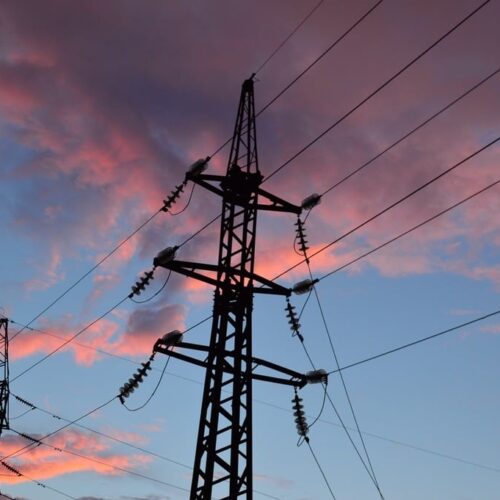
Against the backdrop of aging grid and transmission infrastructure and spiking demand for power from data centers, fleets of electric vehicles and appliances, and advanced manufacturing, more and more, states are having to reckon with record increases in household energy bills, more frequent shutoffs, and irate ratepayers. Speaking at a public hearing last week, Pennsylvania House Energy Committee Chair Elizabeth Fiedler spoke directly to the increasing sense of urgency surrounding our current moment in energy policy:
“Our grid needs upgrades to meet rising demand, but building out new transmission infrastructure raises prices for consumers,” said Fiedler. “Working people, seniors, and small businesses can’t shoulder higher costs right now.”
What policy solutions exist for states to help resolve this seemingly intractable problem? And which states are already rising to meet the moment by implementing them?
Hey, where you ATT?
To help our regional members rise to the occasion, CSG East partnered with The Pew Charitable Trusts last November to convene lawmakers, experts, and energy officials in the capital of one of our region’s most energy-intensive states for a focused discussion on the topic of Advanced Transmission Technologies.
Also known as ATTs, these technologies encompass a set of solutions, which include dynamic line ratings, advanced conductors, and other grid-enhancing technologies (sometimes referred to by their acronym as GETs), that are designed to enhance the load capacity and connectivity of existing powerlines and other electrical infrastructure, thereby delaying or even eliminating the need for costly new buildouts or wholesale replacements. Ultimately, they enable states to extract significantly more capacity and efficiency from existing transmission systems. As a result, ATTs are fast becoming central to how states address rising electricity demand, grid congestion, and affordability concerns.
The convening, which took place over lunch in the Pennsylvania Statehouse in Harrisburg, introduced officials to ATTs and provided them with a practical, solutions-oriented framework for modernizing transmission infrastructure without relying solely on costly and time-intensive new buildouts. CSG East’s Energy & Environment Committee Co-Chair, Pennsylvania Representative Greg Scott, moderated the presentation and discussion, which included speakers from Pew, GridStrategies, and CTC Global.
In a post on Instagram, Representative Scott recounted of the event:
“This week I attended an energy roundtable hosted by The Council of State Governments (CSG East), in partnership with The Pew Charitable Trusts. It was a deep conversation about advanced transmission technologies and our electricity needs, as well as how other states across the nation are using these technologies to modernize.
I am always inspired by the depth of knowledge, expertise and passion that comes through at events like this, and I’m eager to continue working on Pennsylvania-forward energy solutions.”
By creating space for legislators to engage directly with these concepts, hear from technical experts, and explore policy pathways already under consideration in other states, CSG East’s lunch event in Harrisburg grounded the discussion of ATTs in real-world tradeoffs—balancing reliability, cost, and deployment timelines—while also highlighting ATTs as a near-term, scalable solution.
You GETs What You Give
Today, that dialogue and the inspiration it sowed is bearing fruit in the form of two bills that have since been introduced and referred to committee just this month: H.B. 2223, introduced by Representative Elizabeth Fiedler, would encourage the adoption of advanced transmission technologies, and H.B. 2264, introduced by Representative Nate Davidson, which would establish a virtual power plant program in Pennsylvania.
Significantly, both bills promise to unlock capacity faster and save consumers money.
At a time when energy costs are top-of-mind for households and businesses alike, the focus on affordability is especially salient, reflecting policymakers’ growing preference for delivering measurable benefits without passing unnecessary costs onto ratepayers. Moreover, as demand for electricity accelerates—driven by economic growth, electrification, and data expansion—the ability to “get more out of what we already have” is no longer a theoretical concept, but a policy imperative. As Fiedler further underscored, “we need to do everything we can to get as much as possible out of our existing infrastructure.”
Still, hurdles remain. In spite of these technologies’ proven performance, their persistent underutilization owes in large part to “outdated regulatory frameworks and utility businessmodels.”
“Use what we already have, use it smarter, and save people money.”
As states across the East Coast and beyond confront mounting pressure on their electric grids, the need for pragmatic, cost-effective solutions will only intensify. The November 2025 ATT convening stands as a clear example of how thoughtful collaboration can catalyze policy momentum—turning complex technical concepts into actionable strategies that advance reliability, affordability, and innovation.
And while no single convening can claim sole credit for legislative action, the connection between the November event and the introduction of HB 2223 illustrates the value of strategic, nonpartisan policymaker engagement. By equipping legislators with timely information, peer insights, and actionable policy frameworks, CSG East and its partners helped accelerate the translation of emerging technologies into viable legislative proposals.